
Head of Financial Crime or MLRO: Same Job or Two?
As regulated firms grow, a question comes up in almost every financial crime restructure: is the head of financial crime the same person as the MLRO? At some firms the two titles describe one job. At others they are separate roles with different responsibilities, reporting lines and regulatory status. Getting the structure right matters, because only one of them is a Senior Manager Function, and the FCA will want to know exactly who is accountable for what. This guide explains the difference, the structures firms use at different sizes, and what it means when you recruit.
Two Roles With Different Foundations
The MLRO role comes from regulation. The FCA requires firms within SYSC 6.3 to appoint a money laundering reporting officer with responsibility for oversight of their anti-money laundering systems and controls. Under the SMCR, that is the SMF17 function, which needs the regulator’s approval. The MLRO is also usually the firm’s nominated officer under the Proceeds of Crime Act and the Terrorism Act, receiving internal reports and deciding whether to report to the National Crime Agency.
The head of financial crime role comes from organisation design. It is a management role: leading the people, processes and systems that prevent and detect financial crime. Depending on the firm, it may cover anti-money laundering operations, fraud, sanctions, anti-bribery and corruption, and investigations. It isn’t a Senior Manager Function in its own right.
| MLRO (SMF17) | Head of financial crime | |
|---|---|---|
| Basis | Regulatory requirement | Management structure |
| FCA approval | Required as a Senior Manager | Not required as such; may be certified |
| Core focus | Oversight of AML systems and controls; reporting decisions | Running the financial crime function day to day |
| Scope | Money laundering and terrorist financing | Often wider: fraud, sanctions, bribery, investigations |
| Personal exposure | Senior Manager Conduct Rules, Duty of Responsibility, nominated officer duties | Individual Conduct Rules; any certification obligations |
| Reports to | The board, usually via the CEO or a risk or audit committee | Usually the MLRO, the CRO or the COO |
Our guide What Is an MLRO? covers the SMF17 role in full.
Structure One: One Person Holds Both
At small and mid-sized firms, the MLRO usually leads the financial crime function too. There is no separate head of financial crime; the MLRO sets the risk assessment, oversees controls, makes reporting decisions and manages the analysts. This is efficient and gives the board one clear point of accountability.
It works while the MLRO has time for both oversight and management. It starts to strain when the team grows past a handful of people, when the firm adds fraud and sanctions specialisms, or when the MLRO’s time is consumed by managing operations rather than making judgements. At that point the firm usually adds a deputy MLRO first. Our guide to whether you need a deputy MLRO covers that step.
Structure Two: Head of Financial Crime Under the MLRO
As the function grows, some firms appoint a head of financial crime to run operations, with the MLRO focusing on oversight, risk assessment, reporting decisions and the board. The MLRO might also hold another role, such as SMF16, or sit in the second line with a broader compliance remit.
This structure gives the MLRO the time and distance to provide genuine oversight. Its risk is blurred accountability. If the head of financial crime runs the controls and the MLRO is accountable for them, both need to be clear about who decides what, especially on suspicious activity reports and on accepting higher-risk customers.
Structure Three: Head of Financial Crime Holds SMF17
At larger firms, banks and building societies, the head of financial crime is often the MLRO. A single senior leader runs the whole function and holds the Senior Manager accountability. Beneath them sit heads of AML operations, fraud, sanctions and investigations, and usually a deputy MLRO who handles day-to-day reporting decisions.
This is the clearest model for a large function: one leader, one line of accountability. It needs a candidate with both the technical depth expected of an MLRO and the leadership experience to run a substantial team, budget and change programme. That combination is scarce, and searches for it take time.
Which Structure Fits Your Firm?
| Firm situation | Usual structure | Key hire |
|---|---|---|
| Small firm, team of 0–3 | MLRO leads the function; may also hold SMF16 | An experienced, hands-on MLRO, often fractional |
| Growing firm, team of 4–10 | MLRO plus a deputy MLRO or financial crime manager | A deputy who can run operations and provide cover |
| Mid-size firm with several specialisms | MLRO with oversight; head of financial crime running operations | A head of financial crime with leadership and systems experience |
| Large firm or bank | Head of financial crime holds SMF17, with specialist heads beneath | A senior leader with MLRO approval history and large-team experience |
Team sizes are a rough guide. Risk profile matters more than headcount. A small payments or crypto firm can need a deeper structure than a much larger, lower-risk business.
Getting Accountability Right
Whatever the structure, the firm needs to document clearly who does what. Points to settle:
- who makes the decision to submit or not submit a SAR, and who covers in absence
- who approves higher-risk customers, and when the MLRO must be consulted
- who owns the business-wide risk assessment
- who owns fraud and sanctions, if they sit outside the MLRO’s remit
- who writes and presents the annual MLRO report to the board
- how the head of financial crime’s work is overseen if they are not the MLRO
These points belong in the MLRO’s Statement of Responsibilities, the firm’s responsibilities map and the financial crime policy. Our guide to writing a Statement of Responsibilities explains how to set them out, and the FCA’s Financial Crime Guide sets out what it expects of a firm’s governance in this area.
Scenario: A fast-growing e-money institution has an MLRO who also leads a financial crime team of twelve, including fraud and sanctions analysts. The MLRO spends most of her week on staffing, system changes and alert backlogs, and the business-wide risk assessment is six months overdue. The board appoints a head of financial crime to run operations, reporting to the MLRO. Two years later, as the team passes thirty and the firm prepares for Enhanced status, it restructures again: the head of financial crime is approved as SMF17, and the original MLRO moves to a broader chief compliance officer role holding SMF16.
Recruiting the Right Profile
The two roles attract different candidates, and the job title alone rarely tells you which you are hiring.
Hiring an MLRO
Look for judgement, technical depth and evidence of decisions: risk assessments owned, SARs decided, regulatory contact handled, board reporting delivered. Previous SMF17 approval or formal deputising matters, as does sector experience. Our page on MLRO recruitment (SMF17) covers how we run these searches.
Hiring a head of financial crime
Look for leadership and delivery: teams built and managed, monitoring and screening systems implemented, backlogs cleared, remediation programmes delivered. Fraud and sanctions experience is often as important as AML. If the role will also hold SMF17, the candidate needs both profiles, and approvability becomes central to the search.
Our financial crime leadership recruitment practice covers heads of financial crime, deputy MLROs, and sanctions and investigations leads. In our salary guide, heads of financial crime at smaller and mid-sized firms typically earn £95,000 to £145,000 in London, with SMF17 holders at larger firms earning considerably more.
Common Mistakes
- Giving someone the head of financial crime title without clear authority. If the MLRO still makes every decision, the head of financial crime can’t lead.
- Hiring a leader without the technical depth to be the MLRO’s credible successor. If succession is part of the plan, say so in the brief.
- Hiring a technical specialist into a large leadership role. Excellent investigators and analysts don’t always want, or suit, a role managing thirty people.
- Leaving fraud and sanctions in a grey area. If they sit outside the MLRO’s remit, someone senior still needs to own them.
- Not updating the responsibilities map. A restructure that changes who does what must be reflected in the firm’s SMCR documents.
MLRO and Financial Crime Recruitment
The right structure, the right leaders. Every SMF search is led personally by Adrian Lawrence FCA
Financial Crime Leaders
Heads of financial crime and specialists.
→ Financial crime leadership → Deputy MLROsSanctions screening guide →
Combined Role
Compliance officer and MLRO together.
→ Joint SMF16 and SMF17 → Compliance officer (SMF16)When to split the role →
Interim Cover
During a restructure.
→ Interim MLRO → Urgent SMF replacementThe annual MLRO report →
Every SMF search is led personally by Adrian Lawrence FCA
Frequently Asked Questions
Does a head of financial crime need FCA approval?
Only if they also hold SMF17 or another Senior Manager Function. Otherwise they may fall within the Certification Regime, depending on their role.
Can the head of financial crime make SAR decisions?
Only where the firm has formally authorised them to act for the nominated officer, for example as deputy. Otherwise reporting decisions rest with the MLRO.
Should fraud sit under the MLRO?
Many firms put fraud within the financial crime function under the same leader, because the typologies and data overlap. Others keep it in operations. Either works if ownership is clear.
Can you recruit both roles together?
Yes. Running both searches together helps make sure the two people complement each other.
About the Author
Adrian Lawrence FCA is the founder of SMF Capital. He is a Chartered Accountant and Fellow of the ICAEW, holds a practising certificate in his own name, and is a former listed-company Finance Director with a BSc from Queen Mary College, University of London. He founded FD Capital in 2018 and has since built a network of five specialist recruitment practices. He leads every SMF Capital search personally. View Adrian’s ICAEW profile.
Restructuring Your Financial Crime Function?
Tell us about your firm and your current structure. We’ll help you decide where the MLRO and head of financial crime roles should sit, and find the right people for both. We’ll come back to you the same working day.



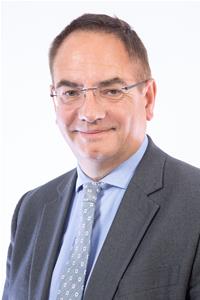
Adrian Lawrence FCA is the founder of SMF Capital and a Fellow of the Institute of Chartered Accountants in England and Wales and holds an ICAEW practising certificate in his own name. He holds a BSc from Queen Mary College, University of London, and has over 25 years of experience working with boards, investors and business owners across the UK. He founded SMF Capital to help FCA and PRA-regulated firms appoint the Senior Managers the regulators expect, with the fit and proper assessment built into every search, and personally leads every Senior Manager Function search.